
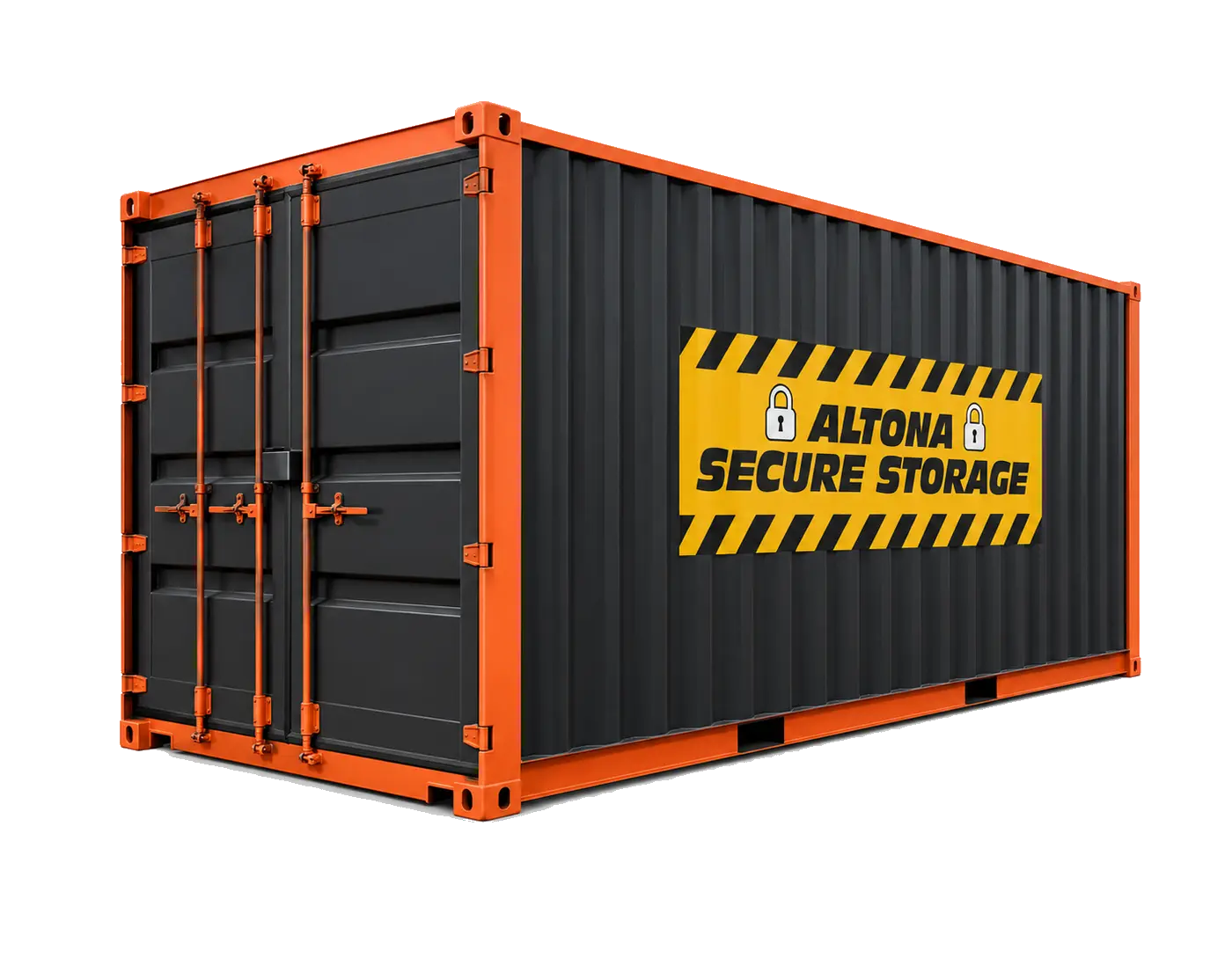
Choosing a storage container is easier when you start with what needs to fit, how often you will need access and whether your storage needs may grow. At Altona Secure Storage, the choice is deliberately simple: a compact 10ft container or a versatile 20ft container.
10ft and 20ft containers at a glance
Both options provide private, ground-level storage in a weather-resistant steel container. The main difference is usable volume and the flexibility that comes with extra length.
| Consideration | 10ft container | 20ft container |
|---|---|---|
| Approximate capacity | 15m³ | 33m³ |
| Best suited to | Smaller loads and focused storage | Larger household or business loads |
| Typical uses | Tools, boxes, seasonal items and apartment contents | Furniture, moving overflow, equipment and stock |
| Planning advantage | Compact and economical when you know the load is modest | More room for bulky items, access space and future additions |
Capacity figures are useful, but they do not tell the whole story. A collection of neatly packed cartons uses space very differently from sofas, shelving and irregular equipment. Think about the shape of your items as well as their total volume.
When a 10ft container makes sense
A 10ft container is a practical choice when you need meaningful storage without committing to a large space. It can work particularly well when you are clearing one or two rooms, storing tools between jobs or creating breathing room during a renovation.
Common 10ft storage uses
- Boxes, small furniture and the contents of a compact apartment
- Seasonal household items, sporting gear and outdoor equipment
- Trade tools and materials that need a dedicated home
- Retail stock, marketing materials or office overflow
- Belongings set aside during a room-by-room renovation
The 10ft option is most efficient when items can be packed tightly and safely. Disassembled furniture, consistently sized cartons and a simple loading plan can make a considerable difference. If you expect to retrieve items frequently, leave a narrow access path rather than filling every last gap.
When a 20ft container is the better fit
The 20ft container gives you approximately 33m³ of capacity, making it the everyday all-rounder for a larger move, business inventory or a mixed collection of bulky belongings. The extra length also gives you more freedom to create zones and keep a walkway.
Common 20ft storage uses
- Furniture and packed belongings during a house move
- Renovation storage involving several rooms
- Business stock, tools, equipment and project materials
- Large or awkward items that do not stack efficiently
- A changing storage load that may grow over time
A larger container is not only about owning more things. It can also be useful when you need regular access. Shelving, labelled zones and a central aisle all consume floor space, but they make stored items much easier to find. For a business, that accessibility may be more valuable than packing the container to maximum density.
Choose around the way you will use the space, not only the quantity you have on day one. Regular access and future additions both require spare room.
Five questions to help you choose
1. What is the largest item you need to store?
Measure long, wide or unusually shaped items first. Sofas, workbenches, mattresses and machinery can determine the required layout even when the rest of the load is small.
2. Can bulky furniture be disassembled?
Removing table legs, bed frames and modular components can significantly reduce wasted space. Keep fixings in labelled bags and attach them securely to the relevant item.
3. Will you need regular access?
If storage is simply for a move, a carefully packed container may be suitable. If you need weekly access to stock or tools, allow room for an aisle and place frequently used items near the doors.
4. Is the load likely to grow?
Renovations, business projects and relocations often produce additional items after storage begins. A little planned spare capacity can prevent a disruptive repack later.
5. Are you comparing cost or convenience?
A smaller space can be efficient when the load is known and well organised. A larger space may provide better practical value when it reduces double handling, makes stock accessible or accommodates bulky objects safely.
Packing changes how much will fit
Before making a final choice, group your belongings by room or purpose and write a simple inventory. Use sturdy cartons, fill empty spaces inside boxes and dismantle suitable furniture. Place heavy, stable items at the bottom and avoid creating top-heavy stacks.
Our container storage preparation guide explains how to clean, protect, label and load your belongings. A good plan helps you use the space efficiently and retrieve items without unpacking the entire container.
Still unsure which size you need?
Tell us what you plan to store, including any especially large items and how often you expect to visit. We can talk through the available 10ft and 20ft options at our Altona facility. If you are still deciding between storage formats, read our comparison of container storage and traditional self storage. You can also explore the suburbs we serve across Melbourne's west or request availability online.