
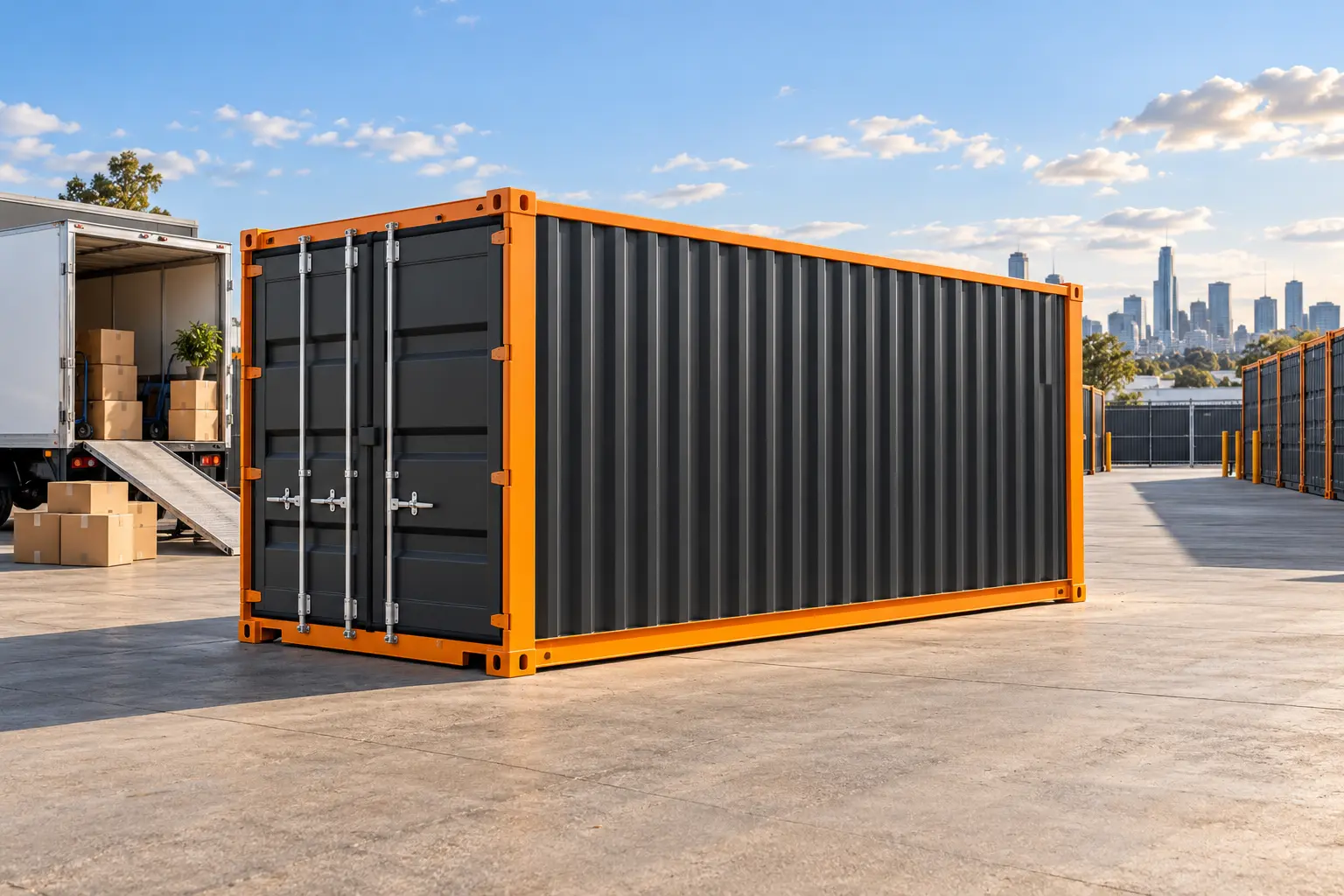
Searching for storage container hire in Altona usually means you want more than a short-term place to put a few boxes. You may be moving house, renovating, making room for a growing business or looking for a local base for tools and equipment. A dedicated steel container can give you private, ground-level space without asking you to keep everything in a garage, driveway, office or crowded workshop.
Start by listing your largest items, estimating your carton or stock volume and deciding how often you will need access. A 10ft container provides approximately 15m³ for smaller or focused loads. A 20ft container provides approximately 33m³ and gives more flexibility for furniture, mixed belongings, business inventory and an access aisle. Before you book, confirm the agreement, access process, security arrangements, prohibited items and insurance responsibilities.
How does storage container hire in Altona work?
Container hire is easiest to understand as a simple storage arrangement: you choose an available container, agree on the start date and rental terms, move your belongings into the container and access them under the facility's arrangements. The container remains a dedicated space for your items, rather than a shared room where your boxes are mixed with other customers' belongings.
The exact process differs between providers, so ask for the details in writing. A typical enquiry should cover the container size, availability, rental period, payment schedule, access procedure, lock requirements, acceptable items and move-out notice. If you are comparing “storage containers for rent near me”, these practical details can be more important than a headline price.
- Describe what you need to store. Tell the provider whether the load is household furniture, renovation contents, tools, stock, equipment or a mixture.
- Compare the available size. Measure bulky items first, then estimate cartons and allow room for safe access.
- Confirm the arrangement. Check the start date, terms, access, payments, lock and prohibited-item rules before move-in.
- Plan the loading day. Prepare labels, covers, trolleys, straps and an inventory before the truck arrives.
- Review the space as your needs change. Keep records current and avoid allowing a temporary storage project to become an unplanned permanent pile.
Should you hire a 10ft or 20ft storage container?
The best size is the one that suits both your belongings and the way you will use the space. A container packed once for a move can be arranged differently from one that a business opens every week. The table below is a planning guide rather than a promise that every load will fit.
| Consideration | 10ft container | 20ft container |
|---|---|---|
| Approximate capacity | 15m³ | 33m³ |
| Good starting point for | Focused, smaller or relatively uniform loads | Furniture, mixed belongings, larger moves or business stock |
| Common uses | Apartment contents, seasonal items, tools and renovation overflow | Household moves, several rooms, equipment, stock and project materials |
| Access planning | Works best with compact packing and a clear loading sequence | More flexibility for zones, bulky items and a retrieval aisle |
| Risk of outgrowing the space | Higher if the load is still changing | Lower when a move or business project may add items |
When a 10ft container is practical
A 10ft container can be a sensible option when the load is known and modest. It may suit the contents of a compact apartment, a few rooms during a renovation, seasonal household belongings, trade tools or a defined batch of business stock. Dismantling suitable furniture and using consistent carton sizes can make the smaller footprint work harder.
The main question is whether you can pack the container safely without blocking the items you expect to retrieve. If you need to visit regularly, reserve a usable path rather than filling every gap. Our 10ft versus 20ft storage container comparison explains the trade-offs in more detail.
When a 20ft container is the better fit
A 20ft container is the more flexible everyday option for a larger move, a multi-room renovation, mixed furniture, business inventory or bulky equipment. The additional length provides more freedom to separate categories, keep frequently needed items near the doors and create a working aisle.
That extra space is useful even when you do not own twice as many belongings. Sofas, wardrobes, mattresses, shelving and irregular equipment create gaps that cartons cannot fill neatly. A little spare capacity can also reduce double handling when a project grows or a move changes at short notice. See what fits in a 20ft storage container for a detailed capacity and layout guide.
Who uses container storage in Altona?
Storage containers can support several practical situations. The right arrangement depends on the goods, how often you need them and the conditions you require. Use the following examples to work out whether a dedicated container matches your project.
Moving house or managing a settlement gap
When a sale, settlement or lease end does not line up with the next move, storage can act as a useful bridge. Pack the belongings that need to be protected first and keep an inventory outside the container. If you are staging the move, put the items you will need on day one—basic kitchen cartons, bedding, cleaning supplies and essential furniture parts—near the doors.
Renovating a home
Furniture and boxes are safer and easier to manage when they are removed from the work area. Before loading, clean and dry everything, wrap upholstered items with breathable protection and separate fragile pieces. Avoid storing wet building materials, chemicals or anything restricted by the storage agreement.
Trades and project work
Builders, installers, landscapers and other trades may need a local place for tools, fittings, equipment and materials between jobs. A clear zone system can keep a project's items together and reduce the temptation to overload a work vehicle. Record serial numbers and photographs for higher-value equipment, and confirm that the site access arrangements suit your schedule.
Growing businesses and online sellers
A container can provide overflow space for cartons, displays, event equipment, spare furniture and stock that does not need to occupy the workplace. Put fast-moving items near the doors, give each product line or project a location code and keep a simple inventory that more than one authorised person can understand. Our business container storage guide for Melbourne's west covers the operational side in more detail.
Families and seasonal storage
Sporting equipment, outdoor furniture, decorations and belongings between life stages can quickly take over a garage. Group similar items, label both the front and side of cartons and place seasonal items where they can be reached without disturbing everything else.
What should you ask before booking storage container hire?
Do not judge a storage facility only by the size of the container or the monthly figure. A clear conversation before move-in helps you compare the service realistically and avoids surprises later.
Ask about access
Find out how visits are arranged, when access is available, whether there are any appointment requirements and how vehicles are handled on site. Ground-level loading can be a major practical advantage, but it is still worth understanding the route from your vehicle to the container and whether a trolley or ramp is appropriate.
Ask about site security
Ask how the facility is monitored, how entry is controlled, what lighting is provided and whether you supply your own lock. “Secure storage” should be backed by clear arrangements that you can understand. You should also ask what to do if you notice damage, a water issue or an access concern.
Ask about the container and its condition
Confirm that the container is weather-resistant and suitable for the type of goods you intend to store. Check whether the door opening will accommodate your largest item and whether any ventilation or moisture-management guidance applies. Do not assume that a standard steel container provides temperature or humidity control.
Ask about terms, payments and insurance
Clarify the minimum rental period, payment dates, notice period, bond or deposit, late-payment process and move-out requirements. Check whether your home or business policy covers goods in storage. Valuable documents, electronics, artwork, medicines and other sensitive items may require a different environment or additional cover.
Ask what is prohibited
Storage agreements commonly exclude hazardous, flammable, explosive, illegal, perishable, wet or living items. Fuel, gas bottles, chemicals, food, plants and items that could leak or attract pests deserve particular attention. If you are unsure, ask before the moving truck is loaded.
How do you load and organise a storage container?
A good loading plan makes the space safer and saves time every time you return. You do not need complicated software. A floor sketch, numbered labels and a short inventory are enough to create a system that works.
1. Make a complete inventory before moving day
List large furniture, appliances, boxes, tools, stock and awkward items. Mark anything fragile, valuable, heavy or likely to be needed soon. Take photographs of complicated assemblies and keep instructions, fixings and keys in labelled bags.
2. Measure the items that determine the layout
Start with sofas, mattresses, wardrobes, benches, cabinets, appliances and equipment. Check the doorway as well as the interior, because an item that fits inside may still be difficult to turn through the entrance. Dismantle suitable furniture and record the packed dimensions.
3. Draw zones before you load
Reserve a position for the largest items first. Then decide where cartons, tools, stock or seasonal belongings will live. If you will visit regularly, protect a central or side aisle. If you are storing for a single move, a denser plan may be appropriate, but keep the load stable and labelled.
4. Load heavy items low and distribute weight
Place robust, stable items and heavier cartons at the bottom. Keep fragile items away from pressure points and do not create top-heavy towers. Use suitable pallets or shelving only where permitted and safe for the intended load.
5. Protect furniture without trapping moisture
Everything should be clean and dry before it goes into storage. Use moving blankets, breathable covers and suitable cartons. Avoid sealing damp fabric or timber under plastic, and allow reasonable airflow around belongings where the load permits.
6. Keep the door zone useful
Place the items you are most likely to need near the entrance. For a household, that may be essential cartons and furniture hardware. For a business, it may be current stock, tools or an upcoming project. Put long-term items deeper inside and label more than one side of every box.
For a room-by-room preparation guide, read how to prepare furniture and belongings for container storage. If you are comparing container hire with a traditional unit, our container storage versus self storage guide covers access, loading and convenience.
How should you budget for container hire?
Storage pricing depends on the container size, rental period, facility, access arrangements and any additional terms. Rather than relying on a generic online estimate, ask for a written summary of the complete arrangement.
- Container size: confirm whether the quoted amount is for a 10ft or 20ft space and what capacity is realistic for your load.
- Rental term: check minimum periods, notice requirements and what happens if your move-out date changes.
- Payments and deposits: understand when payments are taken and whether a bond, administration fee or other charge applies.
- Access: ask whether visits, vehicle loading or special arrangements affect the price.
- Insurance: confirm your responsibility for insuring the goods and whether the provider has any specific requirements.
- Moving equipment: check whether you need to bring a trolley, straps, blankets or other loading equipment.
A slightly larger container can be better value when it prevents a second space, repeated handling or an unsafe stack. The cheapest option on paper is not always the lowest-cost option for the whole move.
Storage container hire booking checklist
Use this checklist when you compare providers or send an enquiry:
- Write down the largest items and approximate carton, stock or equipment quantities.
- Decide how often you expect to visit the container.
- Compare 10ft and 20ft capacity, including the space needed for access.
- Confirm the start date, rental term, payment schedule and notice period.
- Ask about ground-level loading, vehicle access, monitoring and locks.
- Check the prohibited-item rules and any insurance responsibilities.
- Prepare a loading plan, labels, covers and an inventory before moving day.
- Keep your agreement and inventory outside the container where you can find them.
Container storage in Altona and Melbourne's west
Altona Secure Storage provides 10ft and 20ft container storage at 7 Reserve Court, Altona VIC 3018. The facility is designed for practical ground-level loading, with monitored site arrangements and weather-resistant steel containers for homes, businesses, moves, renovations and projects.
We serve customers across Hobsons Bay, Wyndham and Brimbank, including Altona, Williamstown, Point Cook, Truganina, Werribee, Derrimut and Sunshine. Explore all of our secure storage service areas to see the suburbs covered.
Frequently asked questions about storage container hire
What does storage container hire in Altona usually mean?
It generally means renting a dedicated steel storage container at a managed facility for an agreed period. Before booking, confirm the container size, start date, access arrangements, payment terms, prohibited items and what security measures operate at the site.
Should I hire a 10ft or 20ft storage container?
A 10ft container provides approximately 15m³ and can suit a smaller household load, tools or focused business overflow. A 20ft container provides approximately 33m³ and is usually more practical for furniture, a larger move, renovation contents or mixed business stock.
How long can I keep items in a storage container?
The right period depends on the provider's agreement and your storage plan. Ask about minimum terms, notice periods, payment dates, access arrangements and the process for moving out before you commit.
Can I use a storage container while renovating?
Yes. A dedicated container can hold furniture, appliances, boxes, tools and equipment while rooms are cleared. Load items in stages, keep an access path where possible and place the belongings you will need first near the doors.
What should I not put in a storage container?
Hazardous, flammable, explosive, illegal, perishable, wet or living items are commonly restricted. Check the storage agreement and ask the facility before storing fuel, gas bottles, chemicals, food, plants or anything that could leak or attract pests.
Is container storage suitable for business stock?
It can be a practical option for stock, tools, equipment, displays, records and project materials. Create zones, label every carton, keep fast-moving items near the doors and confirm that the container and access arrangements suit the type of goods you hold.
Ready to compare storage containers in Altona?
Start with the items you need to store, the date you want to begin and how often you expect to access the space. Altona Secure Storage can help you compare the available 10ft and 20ft options and plan a practical move-in. Send an availability enquiry online, call 0467 099 381 or visit our service area pages for more local information.